1. MLA Outline — Chapter 1: “Hide Out in God’s Shadow,” False Hope
For an MLA-style outline, I recommend Roman numerals for major ideas, capital letters for subpoints, Arabic numerals for supporting details, and lowercase letters for further details.
I. Marc Dominique Returns to Detroit as a Fugitive
A. Marc arrives from Ottawa without identification.
1. He fears immediate arrest by Detroit authorities.
2. He is wanted for first-degree murder.
3. He fears a public trial and life imprisonment.
B. Marc encounters a young Black border patrol agent.
1. The agent appears tall, young, and honest.
2. Marc attempts to conceal his fear.
3. Marc offers his tattoo as his only identification. (I remember . . ..Maya-French Black)
C. The tattoo becomes an ironic symbol of Marc's identity.
1. It reads, “African American: The Special Edition.”
2. Marc has no legitimate identification.
3. He possesses multiple false identities.
D. The agent allows Marc to proceed into Detroit.
1. Marc feels temporarily relieved.
2. He believes his secret remains safe.
3. He attempts to disappear into the city.
II. Marc Reenters the Dangerous World of Detroit
A. Marc describes Detroit as both home and hostile territory.
1. He refers to Detroit as the “Dirty D.”
2. Familiar locations trigger memories of his criminal past.
3. Ordinary businesses become potential threats.
B. Marc fears recognition and arrest.
1. Police sirens sound like accusations directed at him.
2. He hides his face with a medical mask.
3. He watches people and shadows suspiciously.
C. A coming thunderstorm becomes a metaphor for Marc's life.
1. The storm represents the approaching drug war.
2. Marc believes arrest or death is inevitable.
3. His future appears increasingly hopeless.
III. Marc Confronts His Fragmented Identity
A. Marc considers his numerous identities.
1. Felix Alexander.
2. Jamal Al-Ahmed.
3. Fidel Rodriguez.
4. Quintas Auriellio.
5. Marc Iam Dominique.
B. Marc questions which identity will survive him.
1. He imagines his body in the Wayne County Medical Examiner's Office.
2. He wonders which name will appear on his identification.
3. His aliases symbolize his fractured identity.
C. Marc considers himself a “dead man walking.”
1. He believes his time has already expired.
2. He recognizes the consequences of his criminal lifestyle.
3. He begins contemplating extreme violence.
IV. Marc Identifies His Enemies and His Possible Escape
A. Doc Holiday wants Marc dead.
1. Marc considers Doc a serious threat.
2. The Detroit Police Department is also pursuing him.
3. Marc believes someone may eventually kill him.
B. Marc remembers his hidden money stashes.
1. He has seven stashes throughout Detroit.
2. He hopes one stash can finance his survival.
3. He plans to give money to Anny to help care for Rashard.
C. Marc begins contemplating murder.
1. He considers killing all his enemies.
2. “Kill them all” becomes a recurring expression of desperation.
3. His thoughts reveal his moral deterioration.
V. Marc Encounters Detroit's Criminal Underworld
A. Marc observes prostitutes working in the winter.
1. He recognizes Hubert's women.
2. He compares their desperation with his own.
3. He reflects on his former sexual addiction.
B. Marc describes Hubert as a manipulative pimp.
1. Hubert controls his women.
2. His women are forced to work in dangerous weather.
3. Marc acknowledges his own participation in exploiting them.
VI. Marc Risks His Life to Retrieve a Money Stash
A. Marc travels toward an abandoned nine-story building.
1. He remembers hiding money there.
2. He encounters a prostitute who watches him.
3. He fears being followed.
B. Marc enters the dangerous building.
1. The structure is burned-out and unstable.
2. Rats, darkness, broken stairs, and shattered glass increase the danger.
3. Marc realizes that desperation—not courage—is driving him.
C. Marc reaches the fifth floor.
1. He discovers signs that someone else has recently been there.
2. Fresh cigarette butts and footprints increase his anxiety.
3. He enters the blue apartment containing his stash.
VII. Marc Discovers His $190,000 Stash Has Been Stolen
A. Marc opens the hidden compartment.
1. He finds the red plastic bag.
2. The bag is empty.
3. His money, weapon, and false identification are gone.
B. Marc realizes his survival plan has collapsed.
1. He fears betrayal.
2. He suspects Doc Holiday.
3. He believes his life is now in greater danger.
C. Marc's internal conflict intensifies.
1. He questions whether all seven stashes are compromised.
2. He questions whether he can trust anyone.
3. He considers retaliating against Doc.
VIII. Marc Reveals Charles Richardson's Criminal Empire
A. Marc remembers stealing from Charles Richardson.
1. Charles is the head of the criminal organization.
2. Marc stole approximately $190,000 over several months.
3. Marc used his criminal activities to pay his mysterious debt.
B. Charles threatens his soldiers with extreme punishment.
1. Charles warns against theft.
2. He threatens soldiers' families.
3. His “New Jack” philosophy depends upon fear.
C. Marc explains how he concealed his theft.
1. He redirected suspicion toward other criminals.
2. Innocent soldiers were punished.
3. Four men and members of their families were executed.
D. Marc confronts his own guilt.
1. He initially rationalizes the deaths.
2. He recognizes that he is not “the hand of God.”
3. He admits that his own evil choices contributed to the deaths.
IX. Marc Remembers Doc Holiday's Cruelty
A. Marc describes Doc as exceptionally dangerous.
1. Doc is intelligent and highly educated.
2. He is charming and tactically brilliant.
3. He possesses a sadistic personality.
B. Doc demonstrates his cruelty through Rodney's grandmother.
1. Doc orders an attack on Rodney's home.
2. Rodney's grandmother is already dead when the attack occurs.
3. Doc nevertheless treats her corpse as an object of intimidation.
C. Marc witnesses Doc's psychological brutality.
1. Doc visits the funeral home.
2. He mutilates the corpse.
3. He orders One-Eyes to shoot her again.
D. Marc's horror conflicts with his criminal identity.
1. He is disgusted by Doc.
2. He considers killing Doc.
3. He nevertheless remains part of the criminal world.
X. Marc Reaches Anny and Rashard
A. Marc arrives at his sister Anny's home.
1. He is freezing and physically deteriorated.
2. He has lost fifty pounds in twelve weeks.
3. Anny immediately recognizes that something is seriously wrong.
B. Marc reunites with his son Rashard.
1. Rashard is eleven years old.
2. Rashard embraces his father.
3. Marc breaks down emotionally.
C. Marc confronts his failures as a father.
1. He regrets leaving Rashard behind.
2. Rashard asks to go with him.
3. Marc cannot offer his son a safe life.
XI. Anny Refuses to Shelter Marc
A. Anny is suspicious of Marc.
1. She knows he is wanted for killing a police officer.
2. She fears police surveillance.
3. She fears dangerous people are watching her home.
B. Anny prioritizes Rashard's safety.
1. She agrees to protect her nephew.
2. She refuses to allow Marc to stay.
3. She questions whether Marc was even truthful about his marriage.
C. Marc leaves without the help he desperately needs.
1. He promises to send money.
2. He says goodbye to Rashard.
3. He returns to the dangerous streets.
XII. Marc's Final Hope Collapses
A. Marc has no money or transportation.
1. He must walk back toward Detroit.
2. The remaining stashes may be compromised.
3. He is exposed to freezing weather.
B. Marc becomes physically and psychologically exhausted.
1. He sneezes violently.
2. He shivers in the cold.
3. He fears death, arrest, and betrayal.
C. Marc turns toward prayer.
1. He hopes to avoid his enemies.
2. He hopes to avoid the police.
3. Prayer becomes his final remaining source of hope.
XIII. Biblical Commentary Establishes the Moral Framework
A. Job 8:14 reinforces Marc's fragile hope.
B. Proverbs 1:16 reinforces the chapter's violence.
C. John 8:44 establishes the connection between murder, lies, and evil.
D. Job 30:26 reflects Marc's experience of hope becoming darkness.
E. Proverbs 10:28 challenges Marc's wicked hopes.
F. Galatians 6:7 establishes the theme of consequences.
G. Romans 12:19 directly challenges Marc's desire for vengeance.
XIV. The Supplemental Police Report Expands the Mystery
A. The Detroit Police Department reports Angela Weston missing.
B. Angela's physical appearance and employment are documented.
C. Her father, Marcus Weston, reports her disappearance.
D. Detective Barbara Cook investigates the case.
E. Angela's former boyfriend, Rodney Johnson, becomes a person of interest.
F. The report establishes a possible connection between the criminal world and Angela's disappearance.
G. The supplemental document creates a secondary mystery for the reader.
2. Characters, Physical Descriptions, and Psychological Profiles
There are nine identifiable characters or character-level figures in this section, although some are only briefly mentioned.
CharacterPhysical DescriptionPsychological Profile / FunctionMarc “Bumpy” DominiqueBlack/African American; brown/medium-brown skin; thin black mustache; has lost 50 pounds; hollow cheeks; dark circles beneath eyes; worn black work boots, blue jeans, flannel shirt; tattoo on left forearmComplex protagonist/antihero. Intelligent, paranoid, resourceful, violent, guilty, desperate, emotionally damaged, spiritually conflicted. He recognizes his own evil but continues making destructive choices. His love for Rashard reveals a softer side.Doc HolidayPhysical description is surprisingly limited. His most developed physical imagery concerns his smile, calm demeanor, and clothing; he wears a suit and black silk handkerchief.Primary antagonist. Narcissistic, highly intelligent, educated, charming, tactically brilliant, sadistic, manipulative, cold, murderous. He understands psychological intimidation and deliberately exploits Marc's emotions.One-EyesScratches on cheeks resembling cat whiskers; yellow teeth; sinister grin; feverish eyes; hot/sour breath; one eye is implied by his nickname, but the actual physical condition should be clarified.Secondary antagonist/enforcer. Sadistic, jealous, mocking, obedient to Doc, intimidating. His dialogue establishes him as a willing participant rather than merely Doc's subordinate.AnnyMarc's younger sister; three years younger than Marc. No detailed physical description.Protective but distrustful. Practical, frightened, skeptical, responsible. She prioritizes Rashard's safety over loyalty to Marc. Her refusal creates an important emotional obstacle for Marc.RashardEleven-year-old boy. No detailed physical description.Emotional anchor. Innocent, loving, hopeful, trusting. His desire to go with his father exposes Marc's failure as a parent and gives Marc a reason to survive beyond himself.Charles RichardsonDeep voice; wears a diamond ring; smokes a cigar. Other physical details are absent.Criminal authority figure. Ruthless, calculating, authoritarian, intimidating, sadistic. He controls his organization through fear and collective punishment. His chess game with Marc symbolizes their power relationship.RodneyNo physical description.Minor criminal-world character. A street soldier who owes Doc money. His situation demonstrates Doc's willingness to punish people through their families.Rodney's grandmotherElderly Black woman, presumably in her seventies; pale-brown skin after death; rests in a bronze-colored open casket; associated with a Baptist church, large colorful hats, peppermint, and Sunday service.Symbol of innocence and collateral damage. Her death exposes the extreme cruelty of Doc's criminal world. Her grandmother/mother identity makes the violence more emotionally disturbing.Border Patrol AgentTall, young Black man; strikingly honest appearance.Brief obstacle/threshold character. Professional, observant, controlled. He represents the boundary between Marc's old life and his return to Detroit. He is important symbolically but currently underdeveloped.HubertNo physical description.Minor antagonist. Described as diabolically manipulative and controlling. He represents exploitation within Detroit's criminal/sexual underworld.Hubert's womenMiniskirts and high heels despite snow and extreme cold.Collective victims/symbolic figures. Their exploitation parallels Marc's own sense of being trapped and spiritually degraded.VeronicaNo physical description in this section; she is deceased.Absent but emotionally important character. Her death motivates Marc's return and his desire to obtain money for her funeral. She also humanizes Marc by revealing grief and responsibility.Angela WestonNineteen; 5'7"; 130 lbs.; medium-brown complexion; shoulder-length black braided hair; brown eyes; scar above right eyebrow. Security uniform and black backpack.Missing-person mystery figure. Her disappearance introduces a secondary plot. She is presented as responsible, employed, saving for college, and without a history of running away or substance abuse.Marcus Anthony WestonNo physical description.Angela's father. Worried, exhausted, cooperative with police, protective of his daughter. His interview gives the reader information about Angela and Rodney.Detective Barbara CookNo physical description.Investigative authority. Professional, methodical, empathetic but focused. She provides the procedural perspective that contrasts with Marc's criminal perspective.Rodney JohnsonTwenty-nine; no physical description.Potential person of interest. Angela's abusive ex-boyfriend. Has a history of violence toward her and anger over his arrest. His introduction creates suspicion and potential connection to the larger criminal plot.Mr. HendersonNo physical description.Very minor character. Angela's supervisor at Graystone Pharmacy. His function is primarily to establish that Angela's disappearance was unusual.MorticianElderly, gaunt Black man.Minor morally ambiguous character. He accepts money from Doc and facilitates access to the corpse. His willingness to participate raises questions about corruption and survival within this criminal environment.
3. Which Characters Need More Development?
I would not develop every character equally. That could dilute the story. I would concentrate development on six characters.
A. Marc — Already strong, but needs more psychological layering
Current development: 9/10
Marc is unquestionably the most developed character. We understand:
his fear;
criminal history;
aliases;
relationship with Doc;
relationship with Charles;
guilt;
relationship with Veronica;
relationship with Rashard;
desperation;
capacity for violence;
spiritual conflict;
desire for redemption versus desire for revenge.
The most interesting aspect is his moral contradiction.
Marc can think:
“I wasn't God; I was just a man with a faster, evil mind.”
That is excellent character material because Marc understands that his rationalizations are lies.
What I would add
Give Marc occasional moments where his conscience fights his survival instinct before he acts, rather than primarily after something happens.
That would make his eventual moral choices more powerful.
B. Doc Holiday — Needs more humanization, paradoxically
Current development: 8/10
Doc is vivid, memorable, and frightening.
However, he currently approaches supernatural evil:
“Satan would probably reject his application to hell...”
and
“Doc was the incarnation of Satan.”
These lines establish your thematic intention, but there is a danger: if Doc is nothing but evil, he can become less psychologically frightening.
A truly terrifying antagonist often believes he has a legitimate reason for what he does.
Give Doc:
a philosophy;
a personal code;
something he genuinely loves;
something he fears;
a vulnerability;
a contradiction;
a specific reason he became this way;
a relationship that reveals another side of him.
For example, perhaps Doc genuinely believes fear is the only thing preventing chaos.
Then his atrocities become horrifying because, in his mind, they are rational.
That would make him considerably stronger.
C. Anny — Needs significantly more development
Current development: 6/10
Anny is potentially one of the most important characters in the chapter.
Her scene is excellent because she does something unusual:
She refuses to rescue the protagonist.
That creates conflict without a gun being fired.
But we don't yet know enough about her.
You should consider giving the reader:
her physical appearance;
her occupation;
her marital/family status;
how she raised Rashard;
her relationship with Marc before his criminal life;
why she has continued helping Marc;
what Marc did in the past that caused her distrust;
why the police have visited her;
what she personally fears will happen;
whether she secretly loves or resents her brother.
Her line:
“You’re my big brother and all, but Marc?”
is potentially a very powerful family-history doorway.
I would explore it.
D. Rashard — Needs more development
Current development: 5/10
Rashard is emotionally important, but at present he functions primarily as Marc's emotional trigger.
He needs to become a person rather than simply “the son.”
Give him:
personality;
interests;
fears;
opinions about his father;
memories of his father;
perhaps something he inherited from Marc;
something he strongly dislikes about Marc;
a question about why his father abandoned him.
The line:
“Dad, can I go with you?”
is extremely important.
That question could become one of the emotional engines of the entire novel.
E. Charles Richardson — Needs more development
Current development: 6.5/10
Charles has enormous potential.
The chess scene is particularly effective because the game mirrors the criminal relationship.
Charles is literally playing chess while discussing betrayal and punishment.
That is good symbolism.
But we need more of Charles beyond:
“ruthless criminal boss.”
Give him:
a distinctive physical presence;
speech patterns;
philosophy;
habits;
relationships;
intelligence;
weaknesses;
history with Marc;
reasons he originally trusted Marc;
reasons Marc originally respected him.
Most importantly:
Why did Charles allow Marc to get so close?
That question could deepen the entire criminal hierarchy.
F. Detective Barbara Cook — Needs development if she becomes important later
Current development: 3/10
If Detective Cook is going to recur, develop her now.
She could become a fascinating counterpoint to Marc.
Marc sees the police as hunters.
Cook sees herself as someone trying to reconstruct the truth.
And importantly, the police report says the official story may not necessarily be the whole story.
Marc says:
“They say I murdered a Detroit undercover police officer. Or so they claimed. That is their official story; I have mine.”
That is an excellent opening for an investigator character.
Cook could eventually become the person who discovers that the official version of Marc's story is incomplete.
4. The Most Important Character Development Opportunity
The character I would watch most carefully is Marc himself, because your story's greatest potential isn't simply:
Gangster vs. gangster.
It is:
A morally compromised man trying to survive long enough to discover whether he is still capable of becoming something better.
That makes the biblical material much more powerful.
Your chapter repeatedly creates a three-way struggle:
Marc's survival instinct
↓
Marc's criminal identity
↓
Marc's spiritual conscience
And that conflict is much more interesting than simply making Marc “good” or “bad.”
5. Character Hierarchy in This Section
I would classify the characters this way:
Primary protagonist
Marc “Bumpy” Dominique
Primary antagonist
Doc Holiday
Major secondary characters
Anny, Rashard, Charles Richardson
Secondary antagonistic characters
One-Eyes, Hubert
Potential major mystery characters
Angela Weston, Rodney Johnson, Detective Barbara Cook
Minor/supporting characters
Marcus Weston, Rodney's grandmother, mortician, Mr. Henderson, border patrol agent, Hubert's women
Absent but emotionally significant
Veronica
6. One Structural Recommendation
I think the Angela Weston police report is potentially very important, but right now it feels somewhat detached from the preceding narrative.
That's not necessarily bad—it can function as a mystery hook.
However, if Angela's disappearance becomes important later, I'd deliberately connect it to the chapter's final emotional beat.
You have Marc walking through Detroit thinking about death, murder, missing money, betrayal, and people disappearing—and then the supplemental report introduces an actual missing nineteen-year-old woman.
That creates an intriguing possibility:
Marc thinks he is being hunted, while the reader begins to realize that someone else may already be hunting people.
That could make the police report much more than supplemental material—it could become the first clue to a second mystery operating underneath Marc's story.
1. MLA Outline for “The Next Move”
Chapter 1: Hide Out in God’s Shadow
Section: “The Next Move”
I. Marc Begins a Desperate Fourteen-Mile Walk Through Detroit
A. Marc walks from Eastpointe toward Detroit in freezing weather.
1. Snow and ice cover the ground.
2. A violent thunderstorm threatens the city.
3. Marc has gone forty-eight hours without food.
4. His fingers and toes become numb from the cold.
B. Marc struggles physically and spiritually.
1. He considers asking Charles for money.
2. He rejects that option because it could compromise his plan.
3. He prays while simultaneously thinking about murder.
C. Marc's thoughts reveal his desperation.
1. He tells himself not to die yet.
2. He sees the approaching storm as a representation of his crisis.
3. Survival becomes his immediate objective.
II. Marc Determines That Doc Holiday Has Betrayed Him
A. Marc remembers Charles's instructions concerning his money.
1. Charles ordered him to hide money for emergencies.
2. Charles required Marc to tell one person where the stashes were located.
3. Doc Holiday became the only person who knew all the locations.
B. Marc concludes that Doc stole his money.
1. Marc has known Doc for twelve years.
2. Doc introduced Marc to Charles.
3. Doc believes Marc is a police informant.
C. Marc decides Doc must die.
1. Marc believes Doc has sentenced him to death.
2. Doc's brother Eddie is serving a life sentence.
3. Marc believes Doc blames him for Eddie's imprisonment.
4. Marc vows revenge against Doc.
III. Marc Questions His Relationship With Charles
A. Marc wonders whether Charles remains loyal to him.
B. Marc admits stealing Charles's drug money.
C. Marc explains that he used the stolen money to pay his mysterious debt.
D. Marc begins to suspect that even his best friend may have betrayed him.
E. The fourteen-mile walk deepens Marc's despair.
IV. Marc Retrieves a Secret Emergency Stash
A. Marc remembers a hidden stash that nobody else knows about.
1. The stash contains a Beretta handgun.
2. It contains a fake Michigan identification card.
3. It contains $190,700 in cash.
B. Marc returns to his childhood neighborhood.
1. He goes to Krainz Park.
2. He remembers the area near the former Atkinson Elementary School.
3. He locates the bush where he buried the stash.
C. Marc digs through frozen ground with his bare hands.
1. His fingers become painfully cold.
2. He experiences intense physical pain.
3. He refuses to quit.
D. Marc successfully retrieves the stash.
1. He experiences enormous relief.
2. He considers the discovery a successful move on the chessboard.
V. Marc Temporarily Escapes Into Comfort
A. Marc takes a taxi to a twenty-four-hour Denny's restaurant.
B. He hides in the back of the restaurant.
C. He drinks coffee and eats after his prolonged starvation.
D. He tips the waitress repeatedly.
E. He waits for feeling to return to his hands and feet.
F. Marc then moves to a luxury hotel.
1. He washes his clothes.
2. He bathes.
3. He sleeps in a warm bed.
4. He waits for the thunderstorm to pass.
VI. Marc Constructs a New Survival Identity
A. Marc purchases supplies for a new existence.
1. Seven burner phones.
2. A heavy black overcoat.
3. Beige Timberland boots.
4. Scarf, hat, gloves, and backpack.
5. Clothes and medicine.
6. Medical masks.
7. Hair clippers.
8. Prepaid debit cards.
9. A laptop and internet hotspot.
B. Marc studies the Detroit News.
C. He moves into a dilapidated motel.
D. He assumes the identity of Felix Alexander.
E. The chess metaphor continues as Marc hides one move behind another.
VII. Marc Recognizes That Plan A Has Failed
A. Marc's Canadian plan has collapsed.
1. He intended to become a husband and father in Canada.
2. His plan has become a disaster.
3. He realizes he cannot simply escape his past.
B. Marc recognizes that he has enemies on both sides of the law.
C. He considers Plan B.
D. Marc wants the world to know his story.
1. He wants Detroit to understand what happened to him.
2. He wants people to understand the criminal world.
3. He believes telling his story could help him heal.
4. He connects confession with repentance and understanding his fractured identity.
VIII. Marc Confronts His Sexual Addiction
A. Marc observes a young prostitute outside the motel.
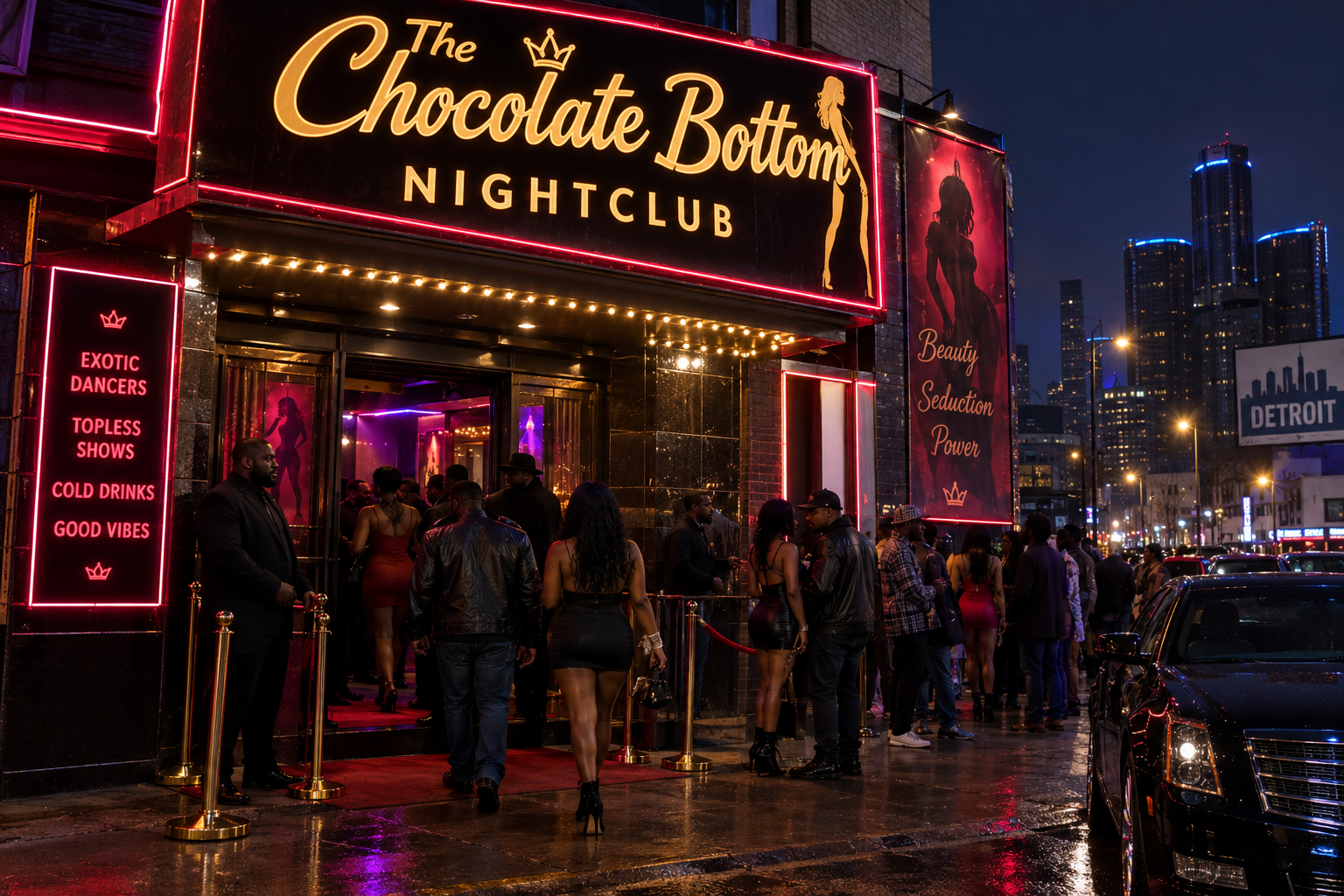
B. The sight triggers memories of the Chocolate Bottom nightclub.
C. Marc experiences a powerful sexual temptation.
D. He recognizes his addiction.
E. Marc struggles internally to resist the temptation.
F. He turns to prayer.
G. He ultimately rejects the opportunity to act on his desires.
IX. Marc Develops a New Plan Centered on Rashard
A. Marc decides to return to Ann Arbor.
B. His goal is to reunite with Rashard.
C. Rashard becomes the “source of all my hope.”
D. Marc wants a place where he can hide and plan.
E. He buys two bus tickets to Ann Arbor.
F. He sends money to his sister to repay her.
G. He attempts to purge himself spiritually through prayer.
X. Marc Uses Criminal Skills to Avoid Detection
A. Marc remains obsessively vigilant.
B. He wears a medical mask.
C. He monitors surveillance cameras.
D. He remembers techniques taught by Doc Holiday.
E. He avoids facial-recognition detection.
F. He conceals the fact that Marc “Bumpy” Dominique has secretly returned to Detroit.
XI. Biblical Passages Reframe Marc's Journey
A. Isaiah 5:20 addresses the reversal of good and evil.
B. Jeremiah 17:9 addresses the wickedness and deceitfulness of the human heart.
C. Psalm 34:6 reflects Marc's cries for God's help.
D. Proverbs 23:27 addresses Marc's sexual temptation and addiction.
E. Psalm 91:1 directly reinforces the chapter title.
F. Psalm 143:9 reflects Marc's desire for protection from his enemies.
G. Psalm 23:4 establishes the metaphor of walking through the valley of death.
XII. The Police Bulletin Establishes Marc's Official Criminal Identity
A. The Detroit Police Department identifies Marc Iam Dominique as wanted.
B. His known moniker is “Bumpy.”
C. The bulletin lists his aliases and physical characteristics.
D. He is wanted for serious felony offenses.
E. Investigators identify him as a former second-in-command of a violent criminal organization.
F. Authorities believe he possesses extensive knowledge of criminal operations.
G. Police characterize him as highly intelligent and extremely dangerous.
H. His whereabouts remain unknown.
XIII. Marc's Two Identities Are Placed in Direct Conflict
A. Marc sees himself as a desperate man seeking redemption.
B. The police see him as an armed and dangerous criminal.
C. Marc sees his return as an attempt to survive and reconnect with his son.
D. Law enforcement sees him as a sophisticated fugitive.
E. The contrast establishes the central identity conflict of the chapter.
XIV. The Section Ends With the Promise of Plan B
A. Marc remains hidden.
B. He is still wanted.
C. He has money and resources again.
D. He has a potential destination in Ann Arbor.
E. His relationship with Rashard gives him renewed purpose.
F. “Plan B” becomes the major forward-driving mystery of the narrative.
2. Characters: Physical Description and Psychological Profile
I would divide the characters into major, secondary, minor, and referenced characters because not everyone mentioned deserves the same narrative weight.
Major Characters
1. Marc “Bumpy” Dominique / Marc Iam Dominique
Physical description:
The police bulletin gives the most complete physical description:
Black male
33 years old
6'1"
200 pounds
Black hair
Brown eyes
Medium-brown complexion
Tattoos:
“Q19”
“SURVIVE”
“African-American The Special Edition”
“Smart Ass Motherfucker”
The narrative also describes him as emaciated after his ordeal and wearing a medical mask, eventually acquiring an overcoat, boots, scarf, hat, gloves, and backpack.
Psychological profile:
Marc is by far the most psychologically developed character.
He is:
intelligent;
strategic;
paranoid/hyper-vigilant;
resourceful;
violent;
morally conflicted;
spiritually conflicted;
desperate;
capable of self-reflection;
addicted to sex;
obsessed with survival;
capable of genuine love for Rashard;
burdened by guilt;
capable of manipulation and deception;
interested in redemption;
simultaneously attracted to revenge.
His greatest psychological conflict is:
Who Marc is vs. who Marc wants to become.
The police describe him as an intelligent, sophisticated criminal planner, while the narrative gives us a man praying for God to help him overcome his weaknesses. That contradiction is one of the strongest elements of the character.
Development: ★★★★★ 9.5/10
He does not need more quantity of development as much as he needs strategic development—particularly showing whether his desire for repentance will survive when survival requires violence.
3. Doc Holiday
Physical description:
This section gives relatively little conventional physical description.
What we know is that:
he is Marc's longtime criminal associate;
Marc has known him for twelve years;
Doc is sufficiently close to Marc to know the locations of his money;
he taught Marc surveillance techniques;
he is connected to Charles's organization.
Psychological profile:
Doc is presented as:
Marc's enemy;
extremely intelligent;
manipulative;
strategically minded;
dangerous;
capable of psychological intimidation;
deeply distrustful;
motivated by suspicion that Marc is a police informant.
Doc's most important psychological characteristic in this section is betrayal through suspicion.
He believes Marc betrayed the criminal organization by becoming a police informant. Marc, meanwhile, believes Doc betrayed him by stealing his money.
That creates a fascinating mutual-betrayal dynamic.
Development: ★★★★★ 8/10
Doc needs more physical characterization and personal motivation.
Most importantly, answer:
Why does Doc hate Marc enough to destroy him?
The Eddie connection provides the beginning of an answer, but I would develop that relationship considerably.
4. Charles
Physical description:
No physical description is provided in this section.
Psychological profile:
Charles is:
Marc's criminal boss;
powerful;
controlling;
strategic;
sufficiently trusted by Marc that Marc considers him a friend;
capable of manipulating Marc;
responsible for instructing Marc to establish emergency money stashes.
Charles occupies an interesting psychological position because Marc does not know whether Charles is his ally or another threat.
Development: ★★★★★ 7/10
Charles needs more development.
The biggest missing element is the emotional history between Charles and Marc.
Why did Marc trust Charles?
Why did Charles trust Marc?
Why did Charles make Marc second-in-command?
Those answers could dramatically strengthen the story.
5. Rashard
Physical description:
No physical description is provided in this section.
Psychological profile:
Rashard is:
Marc's only child;
the “source of all my hope”;
the reason Marc wants to return to safety;
an important symbol of Marc's potential redemption.
Rashard represents the possibility that Marc can become something other than a gangster.
Development: ★★★★★ 6/10
Rashard definitely needs development.
Right now, he is more symbolic than fully characterized.
I recommend giving him:
a distinctive personality;
interests;
fears;
memories of Marc;
opinions about his father's disappearance;
questions about why Marc left;
perhaps resentment mixed with love.
The more real Rashard becomes, the more emotionally devastating Marc's choices will become.
6. Anny
Physical description:
No physical description is given in this section.
She is Marc's sister and Rashard's aunt.
Psychological profile:
Anny is:
important to Marc;
responsible;
concerned about Rashard;
willing to help Marc financially;
practical;
cautious;
indirectly involved in Marc's survival;
someone Marc can potentially trust.
Marc sends her money to repay what he owes her.
Development: ★★★★★ 6.5/10
Anny needs more physical and psychological development.
I especially recommend exploring:
Why does Anny continue helping Marc despite knowing what he is?
That question could create an excellent sibling relationship.
7. Veronica
Physical description:
No physical description is provided.
Psychological profile:
She is Marc's wife and the woman associated with his failed Plan A.
She represents:
Marc's attempt to escape his criminal identity;
marriage;
family;
his desire for a different life;
the failure of that attempted transformation.
Development: ★★★★★ 5/10
If Veronica remains important through flashbacks, memories, or Marc's grief, she needs considerably more development.
The reader should eventually understand:
Why did Marc love Veronica?
Not merely that he loved her.
8. Eddie
Physical description:
None provided.
Psychological profile:
Eddie is Doc Holiday's brother.
He is serving a life sentence based on information and testimony from a police informant. Marc believes this is the reason Doc suspects him of being an informant.
Development: ★★★☆☆ 3/10
Eddie needs development only if he becomes relevant later.
If he becomes part of Doc's backstory, he could be extremely useful.
9. Angela Weston
Physical description:
According to the police material:
19 years old;
Black/African American;
5'7";
130 pounds;
medium-brown complexion;
black shoulder-length braided hair;
brown eyes;
small linear scar above the right eyebrow.
She works as a night-shift security officer.
Psychological profile:
The section establishes that Angela:
is responsible;
reliably reports to work;
is saving money for college;
does not have a history of running away;
has no reported substance-abuse history;
has no reported mental-health crisis;
dislikes walking alone at night.
Development: ★★★★★ 7/10 potential
Angela is particularly interesting because she could become the bridge between Marc's criminal narrative and the police mystery.
If her disappearance connects to Marc, Doc, Charles, Rodney, or another criminal operation, she could become a major character.
10. Marcus Anthony Weston
Physical description:
None provided.
Psychological profile:
Angela's father is:
worried;
exhausted;
protective;
cooperative with police;
attentive to his daughter's routines.
His interview establishes that Angela's disappearance is highly abnormal.
Development: ★★★☆☆ 4/10
He does not necessarily need extensive development unless he becomes important later.
11. Detective Barbara Cook
Physical description:
None provided.
Psychological profile:
Detective Cook appears:
professional;
methodical;
compassionate;
investigative;
focused on establishing facts.
She asks specific questions about Angela, her schedule, her boyfriend, and surveillance evidence.
Development: ★★★★★ 7/10 potential
If Detective Cook becomes a recurring investigator, I strongly recommend developing her.
She could become the police-side protagonist of the secondary mystery, giving the reader a perspective completely different from Marc's.
12. Rodney Johnson
Physical description:
No physical description is provided.
Psychological profile:
The report establishes that Rodney:
is 29;
was Angela's ex-boyfriend;
physically assaulted her six months earlier;
went to jail for the assault;
was angry about his arrest;
previously spent time around West McNichols.
Development: ★★★★★ 7/10 potential
Rodney is potentially very important.
The section gives the reader a reason to suspect him immediately.
But I would be careful about making him too obviously guilty.
If he is actually involved, develop him.
If he is innocent, develop him even more.
Either way, he could become a strong red-herring or secondary antagonist.
13. The Waitress
Physical description:
None.
Psychological profile:
She appears patient and professional. Marc repeatedly tips her five dollars every thirty minutes.
Development: ★★☆☆☆ 2/10
No additional development is necessary unless she becomes important later.
14. The Taxi Drivers
Physical description:
None.
Psychological profile:
They are incidental characters who transport Marc between locations.
Development: ★☆☆☆☆ 1/10
No development needed.
15. The Young Prostitute
Physical description:
young Black woman;
attractive by Marc's description;
wearing knee-high yellow boots;
apparently new to prostitution/hustling.
Psychological profile:
Almost none is provided from her perspective.
Instead, she functions primarily as a trigger for Marc's sexual addiction.
Development: ★★★★☆ 4/10
She needs development only if she returns.
If she does return, I would strongly recommend giving her a name, history, motivation, and agency rather than allowing her to exist merely as an object of Marc's temptation.
16. Overall Character-Development Recommendations
Here is how I would prioritize them:
PriorityCharacterCurrent DevelopmentRecommendation1Marc9.5/10Maintain complexity; deepen redemption vs. violence2Doc Holiday8/10Give him motivation, history, vulnerability, physical traits3Charles7/10Develop his relationship/history with Marc4Rashard6/10Give him a distinct personality and independent goals5Anny6.5/10Develop sibling history, fears, and motivations6Detective Cook7/10 potentialDevelop if she becomes a recurring investigator7Angela7/10 potentialDevelop if missing-person mystery becomes major plot8Rodney7/10 potentialDevelop as suspect or red herring9Veronica5/10Develop through memories/flashbacks if important10Eddie3/10Develop only if connected to Doc's future storyline
My strongest recommendation
The section already has a very good central character triangle:
Marc → Doc → Charles
But I think you can make the novel substantially stronger by creating a second triangle:
Marc → Rashard → Anny
The first triangle represents crime, betrayal, power, and survival.
The second represents family, responsibility, love, and redemption.
Then Detective Cook/Angela/Rodney can form a third narrative strand:
Police investigation → Angela's disappearance → Marc's criminal world
That gives the chapter a much larger structural architecture than simply “a fugitive gangster trying to survive.”
Character-development grade for the section: 8.5/10
The protagonist is strong. The antagonist is memorable. The biggest opportunity is to make the supporting characters feel like people who possess lives independent of Marc, rather than characters who exist primarily to illuminate Marc's story.
One additional point: the supplemental police bulletin is especially useful because it gives the reader a radically different version of Marc—not the frightened, spiritually conflicted man we experience internally, but a 6'1", 200-pound, armed, highly intelligent, extremely dangerous fugitive according to law enforcement. That contrast is excellent characterization and should be preserved.
1. MLA OUTLINE FOR THIS SECTION
Dr. Marc Dubious
A Sinner Kissed an Angel
Part I: Genesis — Bumpy Comes Home a Perfect Gangster
Chapter 1: Hide Out in God’s Shadow
Section: “Crossing the Line”
MLA-Style Alphanumeric Outline
I. Doc Holiday’s murderous determination to eliminate Bumpy
A. Doc establishes himself as a dangerous and sophisticated gangster
Doc is thirty-four years old, six-foot-one, slender, and light-complexioned.
He wears a tailored white shirt, yellow tie, shoulder holsters, and carries two .45-caliber pistols.
His warehouse reflects his interests in gangster culture, weapons, women, money, drugs, cars, and art.
Doc is simultaneously presented as a loving husband, expectant father, art lover, and ruthless serial killer.
B. Doc becomes consumed with the belief that Bumpy is a police informant
Doc blames Bumpy for the loss of cocaine shipments.
Chicago challenges Doc's accusation.
One-Eyes supports Doc but reminds him that Charles has declared Bumpy untouchable.
Doc argues that Bumpy must be eliminated before he causes additional financial losses.
II. Chicago challenges Doc’s theory concerning Bumpy
A. Chicago questions whether Bumpy could actually be the informant
Chicago argues that Bumpy may have stopped the police leaks by killing Detective Keith Lord.
He reminds Doc that Bumpy and Charles have a close relationship.
Chicago explains that Charles and Bumpy function almost like brothers.
The chess game between Charles and Bumpy illustrates their mutual respect and influence.
B. Doc reveals his ambition to challenge Charles
Doc refuses to acknowledge fear of either Charles or Bumpy.
He believes his organization controls a substantial portion of Detroit.
He imagines taking over Detroit and becoming partners with Michael Washington and the Black Mafia Family.
His ambition transforms the conflict from personal revenge into a potential criminal war.
III. Chicago’s secret relationship with Claritza creates another layer of danger
A. Chicago is secretly having an affair with Doc’s pregnant wife
Claritza is eight months pregnant.
Chicago believes the unborn child is his.
Chicago fears Doc will discover the affair.
Chicago secretly considers using Bumpy or Charles to eliminate Doc.
B. Chicago becomes trapped between survival and betrayal
He considers helping Bumpy.
He considers warning Charles.
He must conceal his affair with Claritza.
He must simultaneously protect himself from Doc's suspicion.
IV. Doc develops a plan to force Bumpy out of hiding
A. Doc recognizes Bumpy’s financial vulnerability
Doc believes Bumpy will eventually run out of money.
He assumes Bumpy will return to one of his hidden stashes.
Doc intends to steal Bumpy’s money.
Doc plans to use a planted body to make Bumpy appear responsible for another murder.
B. One-Eyes explains the mechanics of the trap
Bumpy’s money stashes will be stolen.
A dead body will be planted in the abandoned building.
Bumpy’s fingerprints will allegedly be associated with the crime scene.
The police will be encouraged to resume their search for Bumpy.
C. Doc reveals the larger purpose of the plan
Doc wants Bumpy arrested.
He has people inside the prison system who can kill Bumpy.
Doc wants to eliminate Bumpy before Charles completes an enormous heroin transaction.
Doc fears Charles will use the profits to destroy Doc's organization.
V. The criminal conflict escalates into a struggle for power
A. Chicago reveals the organization is losing cocaine shipments
Five keys of cocaine have been seized.
Nineteen keys remain.
The organization expects to run out of cocaine.
Chicago begins to believe that someone inside the organization is betraying them.
B. Chicago eventually agrees to kill Bumpy
He claims to believe Doc’s theory.
He agrees to assassinate Bumpy.
Doc demands that Bumpy’s son also be killed.
Chicago initially refuses because his personal criminal code prohibits killing children.
VI. Doc manipulates Chicago through money, fear, and family loyalty
A. Doc exploits Chicago’s financial losses
Chicago lost $500,000 from the January cocaine shipment.
Doc offers him $500,000 in cash.
Doc offers additional financial rewards for future assassinations.
Chicago eventually agrees to work for Doc.
B. Doc exploits Chicago’s relationship with Eddie
Eddie is Doc’s imprisoned brother.
Eddie refused to testify against Chicago.
Doc argues that Chicago owes Eddie a debt.
Doc uses the possibility of Eddie changing his testimony as psychological leverage.
VII. Chicago crosses his own moral line
A. Chicago agrees to kill Bumpy and his son
Chicago demands $500,000 in advance.
He also demands additional compensation for Charles’s death.
He agrees to enter a possible war against his own cousin.
His financial ambition becomes stronger than his family loyalty.
B. Chicago reveals his true motivation
Chicago wants wealth and independence.
He prioritizes an $80-million cocaine operation over family.
He wants $3 million annually.
He wants enough money to establish his own criminal family.
He ultimately chooses Doc because he believes Doc will win the coming power struggle.
VIII. Doc expands his plan against Charles
A. Doc intends to seize Charles’s territory
Doc plans to use Chicago to kill Bumpy.
He plans for Charles to be eliminated afterward.
He intends to control the West Side of Detroit.
He plans to establish a new relationship with Michael Washington and the Black Mafia Family.
B. One-Eyes expands the assassination list
One-Eyes suggests killing Morris.
He also raises the possibility of eliminating the narcotics chief.
Doc decides to leave Morris to Sabrina Green.
Doc views corrupt police connections as useful to his criminal empire.
IX. Doc declares his final strategy
A. Doc intends to create an army
He plans to recruit criminals throughout Detroit.
He is willing to borrow money to finance an army of street soldiers.
He wants Bumpy eliminated before confronting Charles.
B. Doc uses the chess metaphor to describe his strategy
Bumpy is treated as a piece on a criminal chessboard.
Doc intends to make a strategic move designed to force Bumpy into action.
Bumpy’s son becomes part of Doc’s assassination strategy.
The section ends with Doc believing he can manipulate Bumpy through his financial needs and his sister’s home.
X. The biblical passages reinforce the moral and spiritual themes
A. Mark 7:21 emphasizes evil originating within the human heart.
B. Psalm 55:21 emphasizes the contrast between smooth speech and violent intentions.
C. Hosea 4:2 summarizes the cycle of lying, murder, theft, adultery, and bloodshed.
D. Psalm 83:5 reflects the conspiratorial nature of the meeting.
E. Psalm 37:12 portrays the wicked plotting against their target.
F. Psalm 140:2 reflects the men's preparation for violence and war.
G. Proverbs 17:11 reflects Doc’s rebellion against Charles.
H. Ecclesiastes 9:18 contrasts strategic wisdom with destructive evil.
XI. The Supplemental Police Report introduces a second mystery
A. Valeria Denise Boyd is reported missing
Valeria is twenty-two years old.
She is a Black/African American woman.
She is 5'5" and weighs 125 pounds.
She has dark-brown complexion, black hair in a high sleek ponytail, and brown eyes.
She has a butterfly tattoo and a right-nostril piercing.
B. Valeria’s disappearance is treated as an endangered-person case
She leaves a classmate’s apartment.
She intends to walk two blocks to her vehicle.
Her vehicle is found locked and apparently undisturbed.
Her cell phone stops communicating.
Her mother insists that Valeria would not voluntarily disappear.
C. Detective Barbara Cook begins the investigation
Detective Cook interviews Valeria’s mother.
She learns about a threatening man near the campus.
The man is described as large and wearing a dark work jacket.
Cook orders investigators to examine business surveillance cameras.
The missing-person investigation establishes another potential crime thread.
2. ALL CHARACTERS, PHYSICAL DESCRIPTIONS, AND PSYCHOLOGICAL PROFILES
A. PRIMARY CHARACTERS
1. Doc Holiday
Physical Description:
Thirty-four years old.
Six-foot-one.
Slender.
Light complexion.
Wears a crisp, tailored white shirt and yellow tie.
Carries two black .45-caliber semi-automatic pistols in shoulder holsters.
Has a mustache and goatee.
His eyes can become empty, bloodshot, venomous, or unblinking.
Has a controlled but intimidating physical presence.
Later smells of alcohol on his breath.
His tailored clothing reinforces his sophisticated gangster image.
Psychological Profile:
Ruthless.
Calculating.
Intelligent.
Manipulative.
Ambitious.
Extremely violent.
Emotionally unstable when challenged.
Capable of quickly changing from loving husband to murderous gangster.
Highly possessive of Claritza.
Obsessed with power and money.
Deeply resentful of Bumpy.
Jealous of Bumpy's relationship with Charles.
Uses psychological manipulation rather than violence alone.
Exploits Chicago's financial problems and fear of prison.
Willing to murder children.
Willing to start a war to obtain control of Detroit's criminal empire.
Character Strength: Very strong.
Doc is one of the most developed characters in the section because his actions reveal multiple dimensions rather than merely identifying him as evil.
2. Chicago
Physical Description:
No complete physical description is provided.
He has a goatee.
He is capable of maintaining a calm exterior under extreme pressure.
His physical reactions include trembling, swallowing deeply, wiping his face, and carefully controlling his expressions.
His eyes repeatedly reveal his attraction to Claritza.
Psychological Profile:
Highly intelligent.
Strategic.
Calculating.
Anxious.
Secretive.
Conflicted.
Self-preserving.
Financially motivated.
Willing to betray family.
Has a personal criminal code that initially prevents him from killing children.
Afraid of prison.
Loves Claritza.
Wants Claritza for himself.
Manipulates Doc while pretending to accept his reasoning.
Ultimately allows greed and self-preservation to overcome his moral boundary.
Character Strength: Excellent potential.
Chicago may actually become one of the most interesting characters because he has an internal conflict between money, family, love, survival, loyalty, and morality.
3. One-Eyes
Physical Description:
Jamaican Rasta.
Brownish dreadlocks cascading down his back.
Long dreadlocks that he twirls around his finger.
His dreadlocks are brownish-black.
Carries a loaded silver .45.
Uses his physical presence and weapon to intimidate Chicago.
Psychological Profile:
Ruthless.
Loyal to Doc.
Aggressive.
Suspicious.
Intimidating.
Willing to kill.
Supports Doc's conspiracy against Bumpy.
Comfortable suggesting additional murders.
Has enough independent thought to suggest killing Morris and manipulating the narcotics chief.
Functions as both enforcer and participant in strategic planning.
Character Strength: Moderate to strong.
The nickname “One-Eyes” is intriguing, but the section does not actually explain the physical origin of the name.
4. Claritza
Physical Description:
Young woman.
Eight months pregnant.
Wears a long white dress.
Her pregnancy is visibly pronounced.
Described as beautiful.
Moves gracefully.
Has a physical appearance that strongly attracts Chicago.
Psychological Profile:
Calm.
Affectionate toward Doc.
Apparently comfortable enough around him to touch his face and interact lovingly.
Appears unaware—or deliberately acts unaware—of the murderous conversation.
Her true feelings toward Doc are unclear.
Her relationship with Chicago is secret.
She is pregnant with Chicago's child, according to Chicago's belief.
She represents one of the greatest hidden threats inside Doc's household.
Character Strength: Needs substantial development.
5. Bumpy — Marc “Bumpy” Dominique
Physical Description in this particular section:
No new complete physical description is provided in this section.
He is described as a highly capable gangster.
Chicago refers to him as a “one-man badass.”
He is described as educated and having his own army of soldiers.
He owns a custom Devel Gammon .45 engraved with “Because.”
Psychological Profile:
Intelligent.
Highly capable.
Dangerous.
Respected.
Mysterious.
Resourceful.
Financially vulnerable.
Loyal to Charles according to Chicago.
Feared by other gangsters.
Considered a legend after killing Detective Keith Lord.
His absence creates uncertainty throughout the criminal organization.
Character Strength: Very strong from the larger chapter context, but deliberately mysterious in this section.
Bumpy is interestingly developed through other characters talking about him, rather than through his own direct participation.
B. IMPORTANT SUPPORTING CHARACTERS
6. Charles Richardson
Physical Description:
No detailed physical description is given in this section.
Psychological Profile:
Powerful.
Strategic.
Ruthless.
Highly influential.
Financially dominant.
Commands a large number of soldiers.
Has connections within law enforcement and the justice system according to Doc.
Has a close relationship with Bumpy.
Views Bumpy as valuable and therefore protects him.
Willing to use extreme violence.
Has a criminal code different from Chicago's.
Character Strength: Strong concept, but needs physical and personal development.
7. Eddie Holiday
Physical Description:
No physical description.
Psychological Profile:
Loyal.
Willing to accept imprisonment rather than testify against Chicago.
His loyalty is important enough for Doc to use it as leverage.
Character Strength: Underdeveloped but potentially important.
8. Morris Green
Physical Description:
None provided.
Psychological Profile:
Described by One-Eyes as someone who may be running things from Ohio.
Apparently involved in the criminal organization's operations.
Character Strength: Underdeveloped.
9. Sabrina Green
Physical Description:
None provided.
Psychological Profile:
Described as the new Chief of Narcotics.
Doc views her as potentially useful to his criminal operation.
Her exact relationship to corruption is not fully developed in this section.
Character Strength: Needs development if she becomes important later.
10. Michael Washington
Physical Description:
None.
Psychological Profile:
Extremely powerful criminal figure.
Doc views him as a potential future business partner.
Character Strength: Currently functional rather than developed.
11. Detective Keith Lord
Physical Description:
None.
Psychological Profile:
Undercover Detroit police officer.
Infiltrated Charles's criminal circle.
His investigation contributed to criminal convictions.
He was killed by Bumpy on Charles's orders.
Character Strength: Mostly developed through backstory rather than direct characterization.
C. SUPPLEMENTAL POLICE-REPORT CHARACTERS
12. Valeria Denise Boyd
Physical Description:
Twenty-two years old.
5'5".
125 pounds.
Dark-brown complexion.
Black hair worn in a high sleek ponytail.
Brown eyes.
Small butterfly tattoo on left wrist.
Right-nostril piercing.
Olive-green cropped puffer jacket.
Black ribbed turtleneck.
Light-wash blue jeans.
White leather designer sneakers.
Small quilted black leather crossbody purse.
Carries Michigan driver's license, iPhone, and house keys.
Psychological Profile:
Student.
Part-time administrative clerk.
Maintains strict daily communication routines.
Apparently responsible and dependable.
Lives with her mother.
Communicates with her mother about coming home to help with dinner.
No reported history of mental-health instability or unexplained absences.
Character Strength: Physical development is strong; psychological/personality development is weak so far.
13. Clara Evelyn Boyd
Physical Description:
None.
Psychological Profile:
Extremely concerned mother.
Observant.
Persistent.
Protective.
Immediately recognizes that Valeria's disappearance is abnormal.
Cooperates with Detective Cook.
Provides investigative information despite her distress.
Desperately wants her daughter found.
Character Strength: Moderate.
14. Detective Barbara Cook
Physical Description:
None.
Psychological Profile:
Professional.
Calm.
Organized.
Investigative.
Reassuring.
Takes Valeria's disappearance seriously.
Systematically reconstructs the timeline.
Asks appropriate questions about threats and suspicious people.
Prioritizes the investigation.
Character Strength: Moderate.
15. Nia
Physical Description:
None.
Psychological Profile:
Valeria's classmate/friend.
Was studying with Valeria.
Provides information about Valeria leaving the apartment.
Did not look outside before Valeria left.
Character Strength: Low at present.
16. The Unidentified Man Near the Gas Station
Physical Description:
Bigger man.
Wears a heavy dark work jacket.
Appears associated with local street crews.
Psychological Profile:
Persistent.
Aggressive toward Valeria.
Repeatedly tried to get her phone number.
Became aggressive when she rejected him.
Character Strength: Potentially important.
This character is a major potential mystery hook.
17. Unnamed DPD Personnel
These include patrol officers, evidence technicians, and other police personnel.
Physical/Psychological Profile:
No individual characterization is provided.
Character Strength: Functional/background characters.
3. WHICH CHARACTERS NEED MORE DEVELOPMENT?
Here is my recommendation based on dramatic importance, psychological potential, and future story value.
RankCharacterDevelopment NeedWhy1ClaritzaVery HighShe is Doc's pregnant wife and secretly involved with Chicago. Her true feelings are unclear.2ChicagoHighHe has excellent internal conflict between money, love, family, survival, morality, and murder.3Charles RichardsonHighHe is one of the most powerful figures in the story but remains largely offstage.4BumpyMedium-HighHis reputation is enormous, but readers need to continue discovering the man behind the legend.5Valeria BoydHigh if she becomes a major plotlineThe police report gives us her appearance but very little personality.6One-EyesMedium-HighHe has a distinctive appearance and voice but needs a personal motive beyond loyalty to Doc.7Sabrina GreenMedium-HighHer position as a potentially corrupt narcotics chief could become very important.8Detective Barbara CookMediumShe could become an effective investigative counterweight to the gangsters.9Eddie HolidayMediumHis imprisonment and loyalty to Chicago give him potential importance.10Morris GreenMediumHis connection to Ohio and the drug operation could become significant.11Clara BoydMedium-LowShe is believable as a distressed mother but currently serves primarily as an information source.12NiaLowShe currently functions mainly as a witness.13Keith LordLow-MediumHis importance is established through backstory, but additional development is useful only if he returns through flashbacks.14Michael WashingtonLow for nowHe can remain a looming power figure until he enters the story directly.
MY TOP FIVE DEVELOPMENT RECOMMENDATIONS
1. CLARITZA — THE BIGGEST MISSED OPPORTUNITY
Claritza may be the character who most needs development.
You have already given her three enormous dramatic circumstances:
She is Doc Holiday's wife.
She is eight months pregnant.
Chicago is secretly in love with her and believes the baby is his.
That is explosive material.
But Claritza herself remains mostly silent.
The reader needs to eventually discover:
Does she love Doc?
Does she fear Doc?
Did she marry him willingly?
Does she love Chicago?
Does she know Chicago is the father?
Does she know how murderous Doc really is?
Is she manipulating both men?
Is she trapped?
Is she secretly planning to escape?
She could become a major emotional wildcard.
2. CHICAGO — YOUR MOST INTERESTING PSYCHOLOGICAL CHARACTER
Chicago has an excellent contradiction.
He says:
“I don't kill innocent children.”
Yet he ultimately agrees to kill Bumpy's son.
That is a character transformation happening inside the scene.
His progression is powerful:
Moral boundary → financial pressure → fear of prison → manipulation → betrayal → acceptance of murder.
The most important thing to develop is the exact moment his moral line breaks.
That could make Chicago considerably more memorable.
3. CHARLES RICHARDSON
Charles is powerful because almost everyone talks about him, but he is not physically present in the scene.
He is:
Bumpy's powerful ally.
Chicago's cousin.
Eddie's enemy/authority figure.
Doc's intended target.
A major drug supplier.
A strategic thinker.
A person with enormous financial resources.
Yet we don't really know Charles the man.
I recommend eventually showing:
His physical appearance.
His voice.
His leadership style.
His relationship with Bumpy.
Why he trusts Bumpy.
Why he distrusts Doc.
His relationship with Chicago.
His relationship with Eddie.
His personal weakness.
Charles needs something that makes the reader understand why everyone is afraid of him.
4. BUMPY
Bumpy is actually developed unusually well through other people's descriptions.
Chicago calls him a legend. Doc considers him a threat. Charles protects him. The criminal soldiers respect him.
But that creates a potential danger:
Bumpy could become larger than life before the reader sees enough of his humanity.
The strongest development would therefore not be more descriptions of how dangerous he is.
Instead, show:
His vulnerability.
His relationship with Rashard.
His guilt.
His fear.
His intelligence.
His moral contradictions.
Why Charles values him.
Why Doc feels personally betrayed by him.
That will keep Bumpy from becoming simply “the badass gangster.”
5. VALERIA BOYD
Valeria is physically well described in the police report, but she currently exists primarily as a missing-person case.
That is intentional if you are creating a mystery.
However, if Valeria becomes important, give the reader something that makes them emotionally care about her before discovering what happened.
For example, the existing detail that she promised her mother she would be home to help with dinner is excellent because it humanizes her.
Build on details like that.
Give her:
A personal ambition.
A personality.
A relationship.
A fear.
A habit.
A dream.
Something she desperately wants.
Then her disappearance becomes more than a police report.
OVERALL CHARACTER-DEVELOPMENT ASSESSMENT
Characterization: 8.5/10
The section has a very strong ensemble of characters, particularly Doc, Chicago, One-Eyes, Bumpy, and Charles.
The strongest feature is that the characters have competing loyalties:
Doc → power and revenge
Chicago → money, survival, Claritza, and self-interest
One-Eyes → Doc and criminal power
Charles → empire and control
Bumpy → survival and loyalty
Claritza → hidden emotional conflict
That gives the section considerable dramatic potential.
The biggest opportunity is not adding more characters. You already have plenty.
The next stage should be deepening the existing characters, particularly Claritza, Chicago, Charles, Bumpy, and Valeria.
Most important editorial recommendation
Let the characters reveal themselves through choices rather than repeatedly telling the reader what they are.
For example, Chicago's refusal to kill a child is much more powerful than simply calling him “moral.” His eventual decision to cross that line is even more powerful because the reader watches his morality collapse in real time. Likewise, Doc's manipulation of Chicago demonstrates his ruthlessness more effectively than repeatedly labeling him ruthless.
That approach will make the psychological dimension of A Sinner Kissed an Angel much stronger.
